
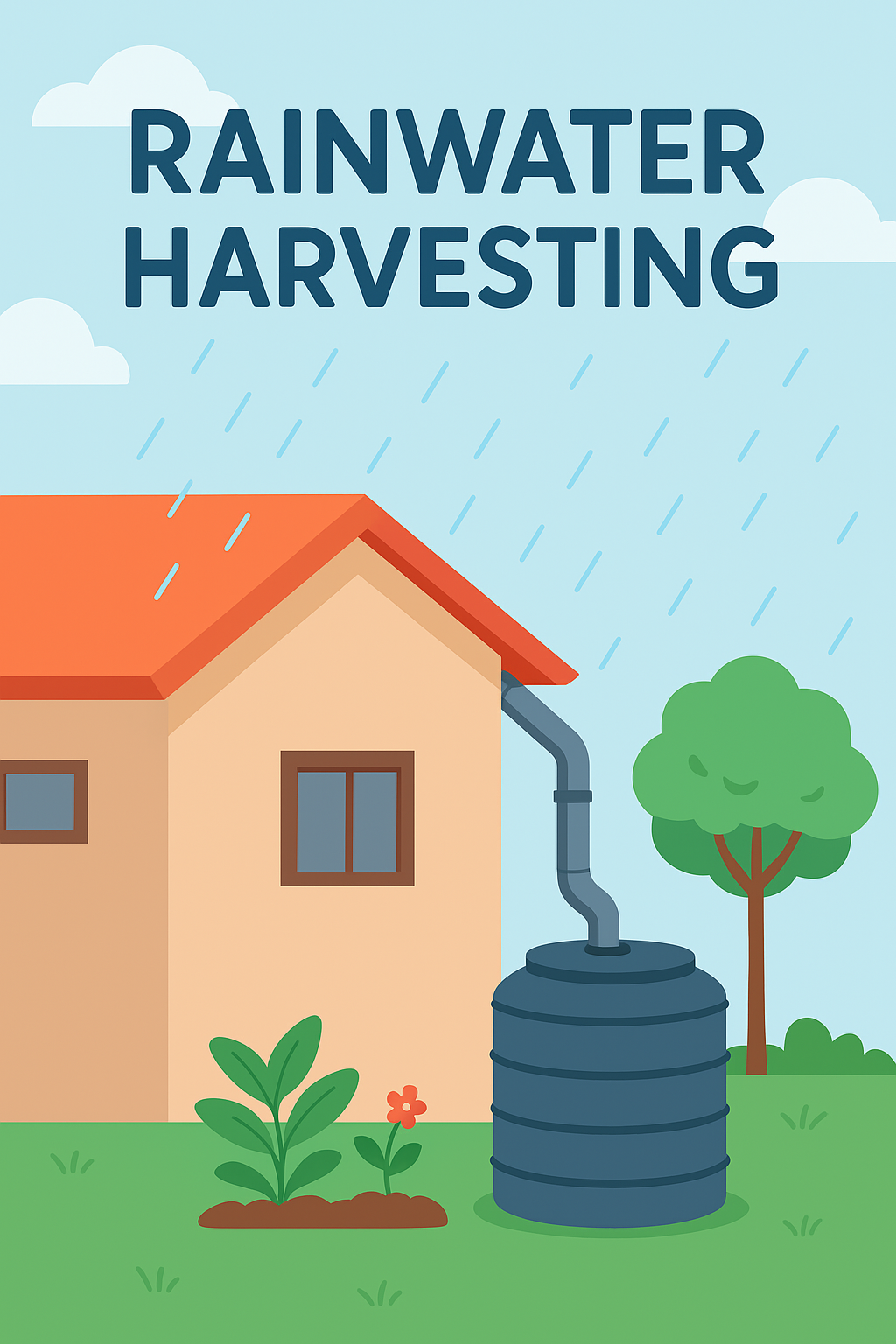
What is Rainwater Harvesting?
Rainwater harvesting is the practice of collecting and storing rainwater for later use. Instead of allowing rain to flow into drains and get wasted, it is captured from rooftops, open grounds, or natural catchment areas and stored in tanks or underground reservoirs. This water can be used for various purposes such as irrigation, household chores, industrial needs, and, when properly treated, even drinking.
Benefits of Rainwater Harvesting
-
Reduces Water Scarcity – Helps meet daily water needs without overusing groundwater.
-
Recharge of Groundwater – Excess rainwater percolates into the soil, increasing the water table.
-
Cost-Effective – Requires minimal infrastructure and reduces dependence on expensive water supply systems.
-
Prevents Flooding & Soil Erosion – By storing excess rain, it minimizes waterlogging and damage to the environment.
-
Eco-Friendly – Promotes sustainable use of resources and reduces pressure on rivers and lakes.
Methods of Rainwater Harvesting
-
Rooftop Collection Systems – Rainwater is collected from rooftops and stored in tanks.
-
Recharge Pits & Wells – Water is directed underground to replenish aquifers.
-
Surface Runoff Harvesting – Rainwater from roads, parks, or fields is collected and stored for later use.