
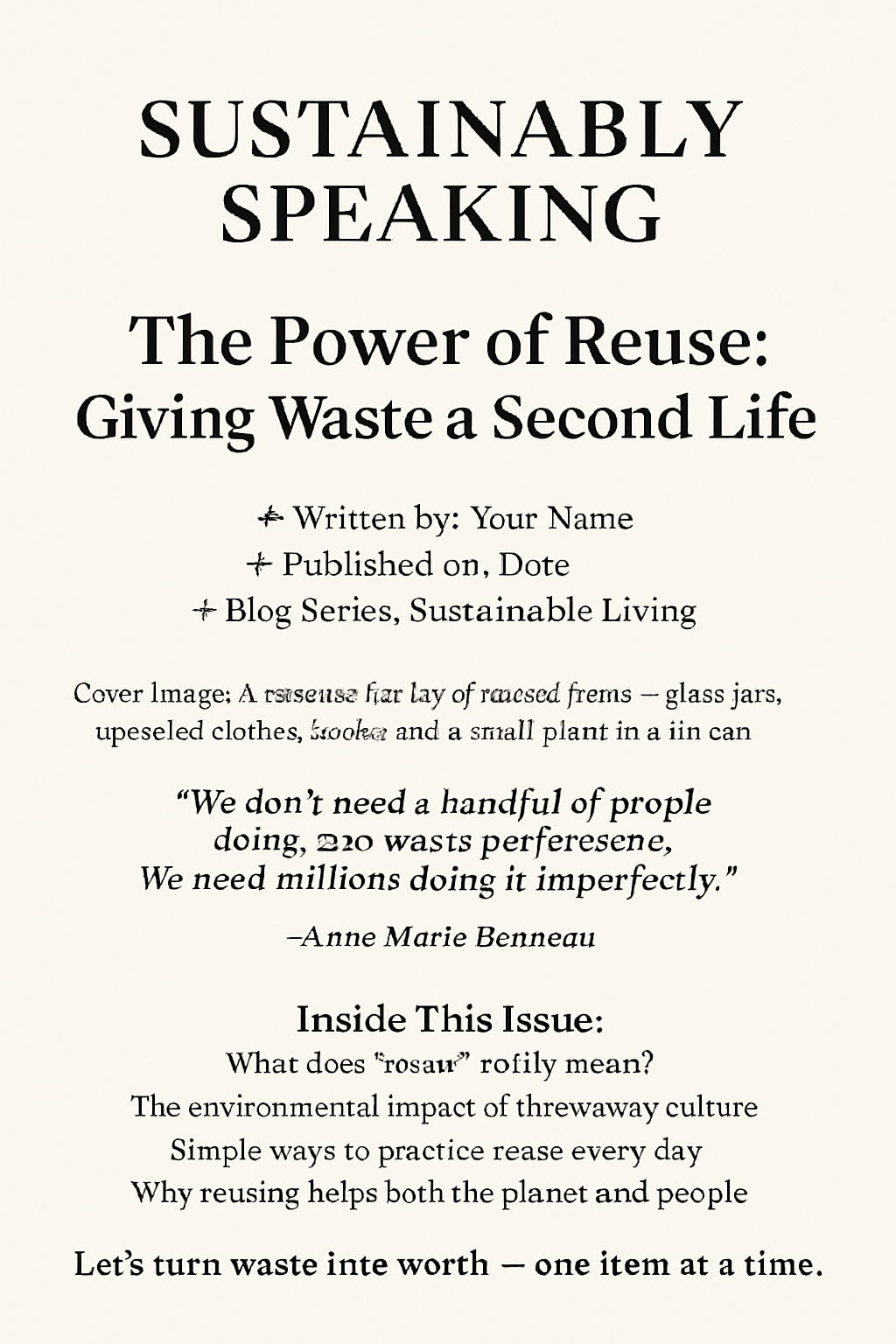
In a world that constantly encourages us to buy more, use more, and throw more away, it’s easy to forget the value of what we already have. Every day, millions of items — from plastic bottles to clothes to electronics — are thrown out, many of them still perfectly usable. This throwaway culture is harming our planet, but there is a simple solution that each of us can practice: reuse.
Reusing is not a new idea. Our grandparents did it all the time — saving jars, repairing clothes, handing down toys. Today, with fast production and low prices, we’ve started replacing things instead of fixing or reusing them. But this comes with a cost. Landfills are filling up. Natural resources are being used faster than they can be replaced. Pollution from waste is affecting air, water, and wildlife.
By choosing to reuse, we reduce the demand for new products and the resources needed to make them. It can be as simple as using a glass jar to store food instead of buying a new container. Or turning old t-shirts into cleaning cloths. Even donating things you no longer need is a form of reuse — someone else might find value in what you don’t use anymore.
Reuse also sparks creativity. People around the world are finding smart and artistic ways to give waste a second life — making furniture from wooden crates, wallets from old jeans, or planters from plastic bottles. It’s not just eco-friendly, it’s fun and fulfilling too.
Living sustainably doesn’t always mean making big changes. Often, it’s the small, repeated choices that matter most. Reuse teaches us to respect what we have, waste less, and care more. The more we practice it, the more we realise that we don’t always need new things to live a better life — sometimes, the best things are already with us.