
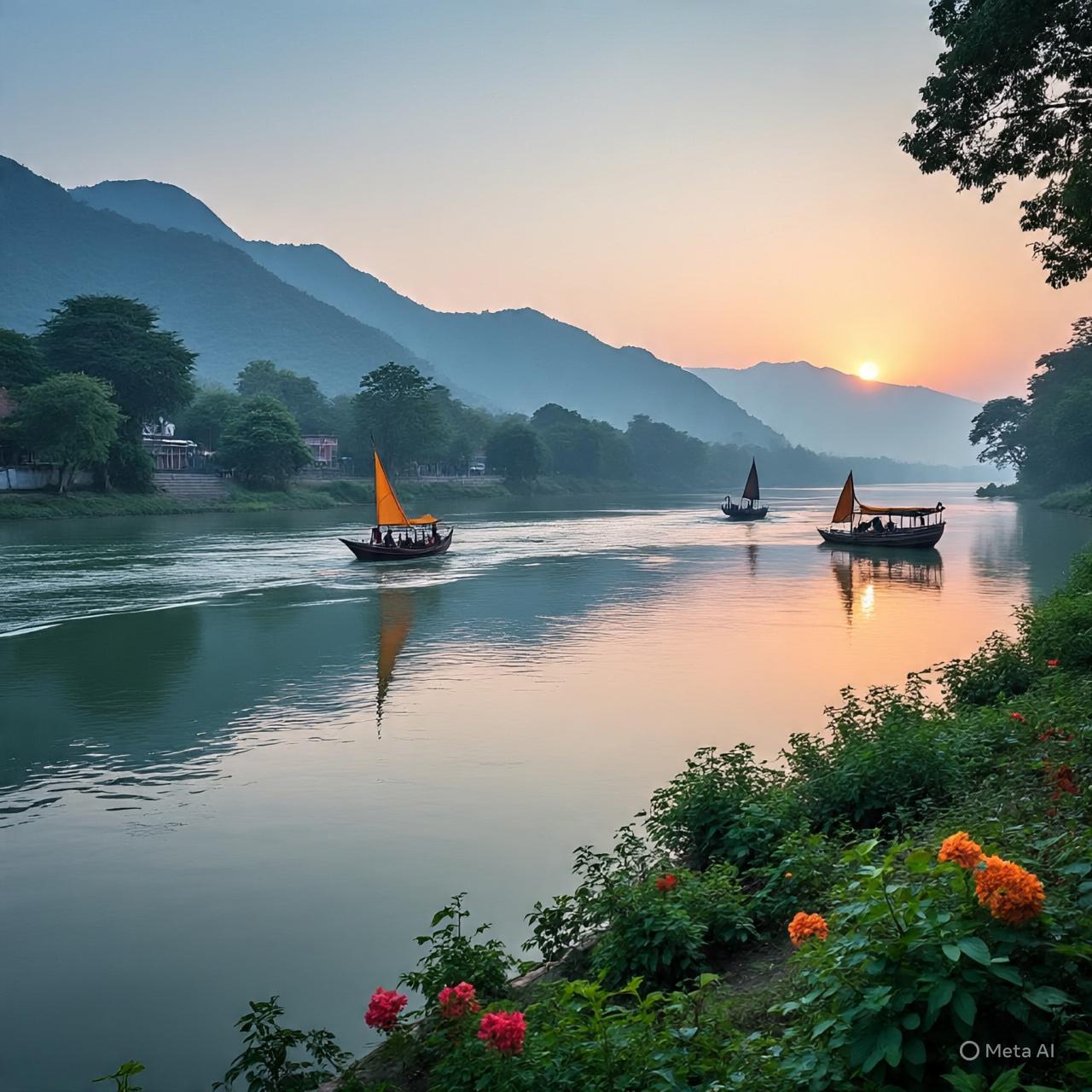
The Ganga River is one of India's most sacred and iconic waterways, stretching over 2,525 kilometers from its origin in the Himalayas to its delta in the Bay of Bengal. Here's an in-depth look at this magnificent river:
*Origin and Course*
The Ganga River originates from the Gangotri Glacier in Uttarakhand's Uttarkashi district, where it begins as the Bhagirathi River. It then flows through the Himalayas and meets the Alaknanda River at Devprayag, marking the point where the river is named Ganga. From there, it traverses through five Indian states: Uttarakhand, Uttar Pradesh, Bihar, Jharkhand, and West Bengal, before entering Bangladesh and emptying into the Bay of Bengal ¹ ².
*Cultural Significance*
The Ganga River holds immense cultural and spiritual significance in Hinduism. It's considered a goddess and mother, with millions of devotees bathing in its waters to purify their souls and seek salvation. According to Hindu mythology, the river was brought to Earth by King Bhagiratha to liberate his ancestors from a curse. The Ganga is also believed to have healing properties, and many Hindus store its water in their homes for use in rituals ³ ⁴.
*Tributaries*
The Ganga River has several significant tributaries, including ¹ ⁵:
- *Right Bank Tributaries:*
- *Yamuna River*: The second-largest tributary of the Ganga, which joins it at Prayagraj.
- *Son River*: A major tributary that contributes significantly to the Ganga's flow.
- **