
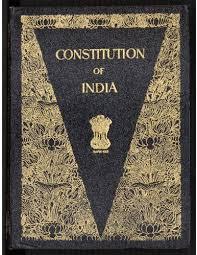
Today was the day when the Indian constitution was completed and edited and was ready to implemented. So, today we will put light on the concepts of Indian constitution.
Manuscripters (People who dotted down the Indian constitution) :
- Prem Behari Narain Raizada in English
- Vasant Krishan Vaidya in Hindi
- Nand Lal Bose and Beohar Rammanohar Sinha were the artists that illuminated the documenting and creating illustrations for the original constitution.
Properties :
- When the constitution was made it consisted of 22 parts which have now grown to 25 parts.
- When the constitution was firstly abolished it consisted of 395 articles which has now grown to 448 articles.
- The constitution begins with a preamble based on the Objective Resolution passed by Jawaharlal Nehru.
- There were 8 schedules when the constitution was firstly abolished which has now grown to 12 schedules.
Now, let's talk about the role of Dr. B.R Amedkar in Indian Constitution :
Dr. B.R Ambedkar played a critical role in drafting the Indian Constitution and also added the Article 17 to the Indian constitution which was based on untouchability.
Now let's talk about the countries from which Indian constitution adopted concepts like fundamental rights etc. :
- United Kingdom
- Ireland
- Canada
- Australia
- United States
- Germany
- Soviet Union (USSAR)
- South Africa
- Japan
- Foundation Government of India Act 1935
Now let's talk that what did the major things they adopted :
United Kingdom:
Parliamentary government, Rule of Law, Cabinet system and Single citizenship.
United States:
Fundamental Rights, Independence of the judiciary, and due to the process of law.
Ireland:
- Directive Principles of the State Policies (DPSP)
- Method of the election of the President
- Nomination of members to the Rajya Sabha
Canada:
Federation with a strong centre, Vesting of residuary powers in the Centre, and Advisory jurisdiction of the Supreme Court.
Australia:
- Concept of the Concurrent List.
- Freedom of trade, commerce, and intercourse
- Joint sitting of the two houses of Parliament.
Germany (Weimar Constitution):
- Suspension of Fundamental Rights during an emergency
Soviet Union (USSR):
- Fundamental Duties
- Ideal of Justice (social, economic, and political) in the Preamble
South Africa:
- Procedure for the Amendment of Constitution
- Election of members of the Rajya Sabha
Japan:
Procedure established by law.
Government of India Act, 1935:
- This act forms the main foundation of the Indian Constitution, providing features like the federal scheme, office of the Governor, Judiciary, Public Service Commissions, and emergency provisions.
I hope that you had a great time reading the article. Thanks for reading