
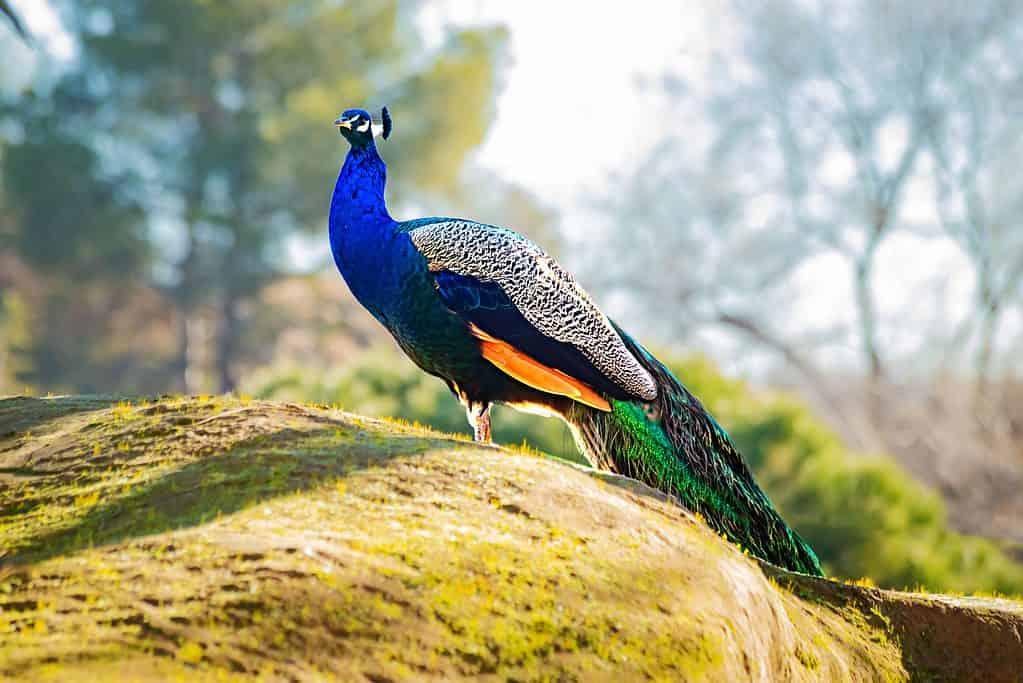
To protect peacocks, individuals can provide water and supplemental feed during dry seasons, plant trees that provide cover and food, and support conservation efforts through awareness and anti-poaching measures. Legally, peacocks are protected under India's Wildlife (Protection) Act of 1972, making it illegal to harm or hunt them.
Immediate, on-the-ground actions
- Provide water: During summer, place earthen pots with clean water in areas frequented by peacocks to help them through the dry season.
- Offer supplemental feed: If food is scarce, you can supplement their diet with grains like bajra, jowar, or maize.
- Plant native trees: Planting native tree species, especially berry-producing ones, can improve their habitat by providing shelter and food.
Support conservation
- Educate others: Raise awareness about the cultural and ecological value of peacocks. Their presence in agriculture helps control insects that harm crops, which is beneficial for farmers.
- Avoid harmful practices: Discourage the use of pesticides and fertilizers that could harm the peacocks or their food sources. Encourage farmers to use bio-pesticides and vermicomposting instead.
- Contribute to organizations: Support non-governmental organizations (NGOs) that are actively involved in peacock conservation efforts.
Legal protection
- Understand the law: Peacocks are a protected species under India's Wildlife (Protection) Act of 1972.
- Report illegal activity: If you witness or suspect poaching, smuggling, or illegal trade, report it to the authorities immediately.