
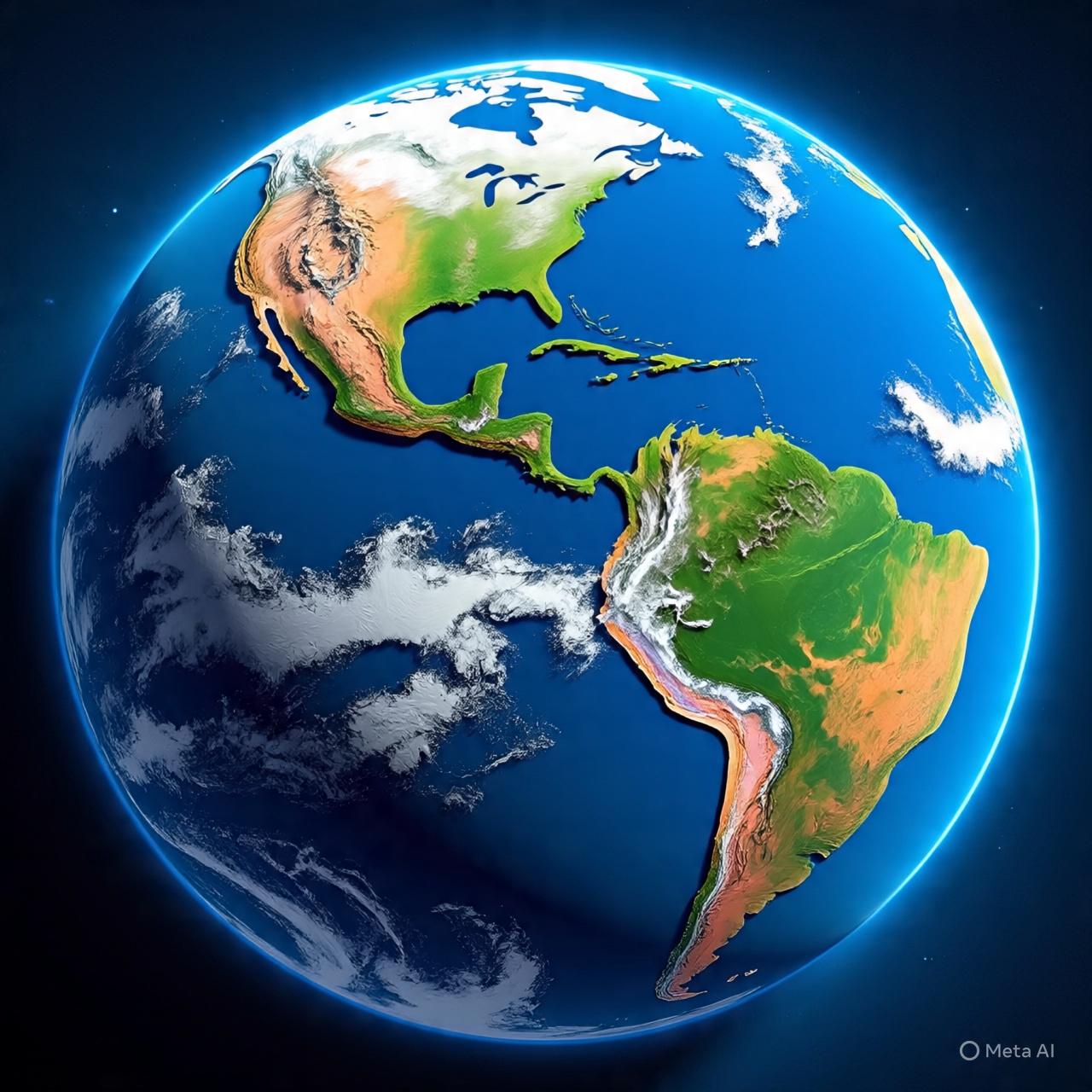
The Earth 🌎
The Earth is our home planet, a dynamic and vibrant world teeming with life. It is the third planet from the Sun in our solar system and the only known celestial body to support life. The Earth's diverse environments, from lush rainforests to vast oceans and towering mountain ranges, create a rich tapestry of ecosystems that sustain a wide variety of plant and animal species.
*The Earth's Structure*
The Earth is composed of several layers, including the crust, mantle, outer core, and inner core. The crust is the outermost layer, ranging in thickness from 5-70 km, and is broken into tectonic plates that move and interact, causing earthquakes, volcanic eruptions, and the formation of mountain ranges. The mantle beneath the crust is a thick layer of hot, viscous rock that flows slowly over time. The outer core is a liquid layer of iron and nickel, generating the Earth's magnetic field, while the inner core is a solid, iron-nickel alloy at the planet's center.
*The Earth's Atmosphere*
The Earth's atmosphere is a complex layer of gases that surrounds the planet, regulating temperature, protecting life from harmful radiation, and influencing the weather and climate. The atmosphere is composed of 78% nitrogen, 21% oxygen, and trace amounts of other gases, including carbon dioxide, which plays a crucial role in the greenhouse effect.
*The Earth's Oceans*
The oceans cover over 70% of the Earth's surface, playing a vital role in regulating the climate, producing oxygen, and serving as a primary source of food for billions of people. The oceans are home to a vast array of marine life, from tiny plankton to massive blue whales, and their ecosystems are essential for maintaining the health of our planet.
*The Earth's Biodiversity*
The Earth is home to an incredible array of plant and animal species, from the simplest bacteria to complex organisms like humans. The natural world provides essential services, including air and water purification, soil formation, and climate regulation, making it essential for human survival and well-being.
*Threats to the Earth*
The Earth faces numerous threats, including climate change, deforestation, pollution, and loss of biodiversity. Human activities, such as burning fossil fuels, deforestation, and pollution, are causing irreparable harm to the planet, highlighting the need for sustainable practices and conservation efforts to protect the Earth's natural resources for future generations.
*Conservation and Sustainability*
Protecting the Earth requires a collective effort to adopt sustainable practices, reduce waste, and conserve natural resources. This can be achieved through individual actions, such as reducing energy consumption, using public transport, and recycling, as well as through policy changes and international cooperation. By working together, we can mitigate the impact of human activities on the planet and ensure a healthy and thriving Earth for generations to come.
In conclusion, the Earth is a precious and unique planet that supports an incredible array of life. It is our responsibility to protect and preserve the Earth's natural resources, mitigate the impact of human activities on the planet, and ensure a sustainable future for all.