
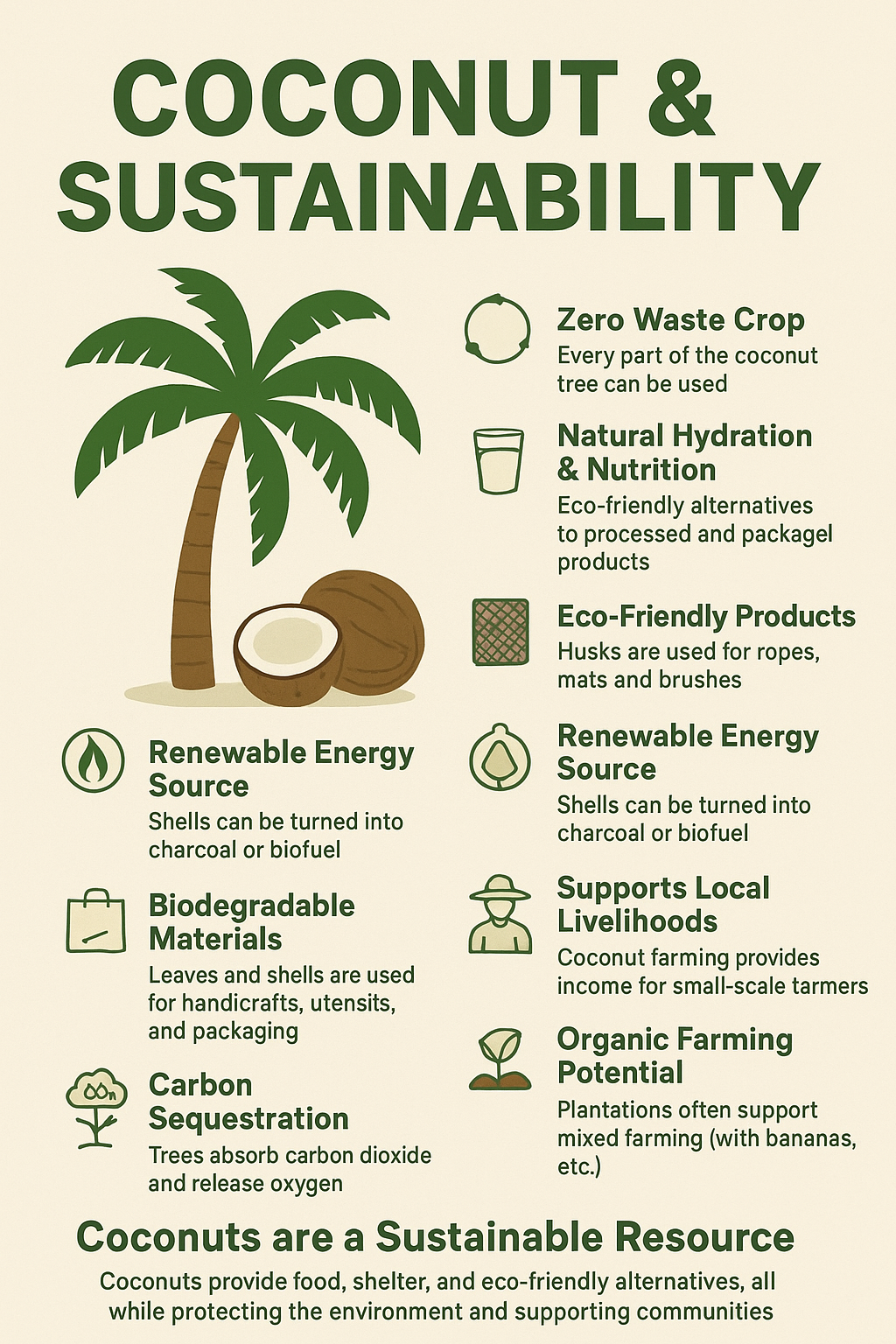
Here’s how coconut contributes to sustainability:
-
Zero Waste Crop – Every part of the coconut tree can be used. The fruit, leaves, trunk, and husk all serve purposes, ensuring minimal waste.
-
Natural Hydration & Nutrition – Coconut water and flesh provide healthy, eco-friendly food and drink alternatives, reducing dependence on processed and packaged products.
-
Eco-Friendly Products – Coconut husks are used to make coir (ropes, mats, brushes), reducing the need for synthetic, plastic-based materials.
-
Renewable Energy Source – Coconut shells can be turned into charcoal or biofuel, offering a sustainable energy option.
-
Biodegradable Materials – Coconut leaves and shells are used to make handicrafts, utensils, and packaging that are biodegradable and reduce plastic pollution.
-
Supports Local Livelihoods – Coconut farming provides income for millions of small-scale farmers, promoting rural sustainability and fair trade.
-
Carbon Sequestration – Coconut trees absorb carbon dioxide and release oxygen, contributing to a cleaner atmosphere.
-
Organic Farming Potential – Coconut plantations often support mixed farming (with spices, bananas, etc.), which enriches biodiversity and prevents soil degradation.
-
In short, coconuts are a sustainable resource because they provide food, shelter, and eco-friendly alternatives, all while protecting the environment and supporting communities.