
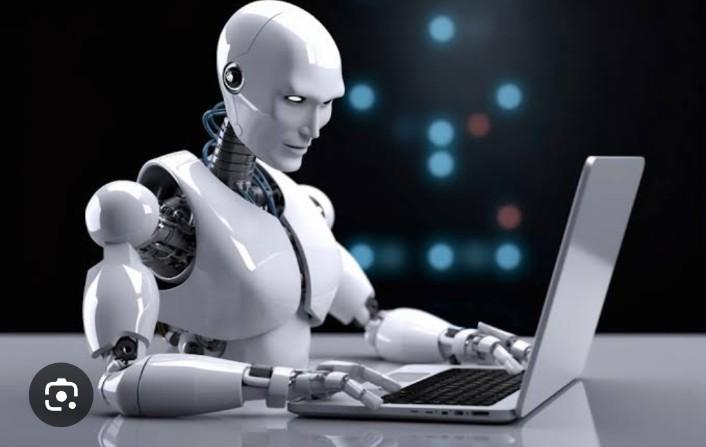
Artificial Intelligence, also called AI, is a kind of smart technology that can do tasks that usually need human thinking. These tasks include recognizing speech, solving problems, and even writing or drawing! While AI is becoming more powerful every year, many people wonder how it compares to humans. Can AI replace humans, or is it just a helpful tool?
AI is very good at doing things quickly and accurately. For example, it can solve math problems, search the internet in seconds, and even drive cars! In hospitals, AI helps doctors by reading X-rays or finding diseases. In schools, it can help students study by answering questions and checking grammar. AI never gets tired, doesn't need breaks, and can work all day long.
However, humans have something that AI doesn't—feelings, creativity, and understanding. A robot can write a song, but it doesn’t really feel the emotions behind it. People can care for others, tell jokes with meaning, and understand the difference between right and wrong. Humans can also make choices based on love, kindness, or even personal experience, which AI cannot do.
Another big difference is that AI only knows what it is taught. It learns from data, but it doesn’t have common sense like humans do. For example, if a computer is told a banana is blue, it might believe it—unless it is trained otherwise. Humans know a banana is yellow because of real-life experience. So, while AI is smart, it can also make silly mistakes.
In conclusion, AI is a powerful tool that can help humans in many ways, but it cannot replace us. Humans are still the most creative, emotional, and thoughtful beings on the planet. AI is best used as a helper, not a replacement. If we use AI wisely, we can make the world a better place—with both humans and machines working together.