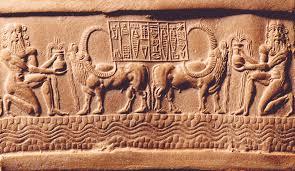
The Mesopotamian civilization, often hailed as the cradle of civilization, arose around 3500 BCE in the fertile crescent between the Tigris and Euphrates rivers, covering present-day Iraq and parts of Syria, Turkey, and Iran. The region’s rich alluvial soil, combined with advanced irrigation techniques, enabled the cultivation of surplus crops, which supported the growth of large city-states like Sumer, Akkad, Babylon, and Assyria. The Sumerians pioneered cuneiform writing, one of the earliest scripts, carved into clay tablets to record trade transactions, legal codes, and literature, including the renowned Epic of Gilgamesh. Mesopotamian society was highly organized, with specialized labor, structured governance, and codified laws, the most famous being the Code of Hammurabi, which established principles of justice. Their polytheistic religion shaped daily life, with grand temples called ziggurats built as centers of worship dedicated to deities representing elements of nature and human activities. They made remarkable contributions to mathematics, astronomy, timekeeping, and urban planning, influencing scientific and administrative systems for centuries. Skilled artisans advanced metallurgy, pottery, and textile production, while traders established far-reaching networks that connected Mesopotamia to distant lands. Education was valued, especially for scribes, who were essential for record-keeping and administration. Despite periods of prosperity, the region experienced cycles of conquest, environmental challenges like soil salinization, and shifting political powers. Even after its decline, Mesopotamia’s innovations in law, governance, agriculture, writing, and architecture laid foundational pillars for future civilizations, making it one of the most influential early cultures in human history.